


Introduction
Fabric weight is one of the clearest signals that separates an ordinary hoodie from a premium menswear piece. For gentlemen hoodies, high-GSM fabric influences structure, drape, warmth, durability, and how well the garment maintains a refined silhouette over time. This guide explains what high GSM actually means, where the premium range begins, and how different weights affect comfort, appearance, and perceived value. By the end, readers will be better equipped to evaluate heavyweight fleece options, balance luxury with wearability, and choose fabrics that help a hoodie feel polished enough to sit confidently alongside more tailored wardrobe staples.
Why High-GSM Gentlemen Hoodies Matter
When developing premium menswear, the secret to a luxury feel isn’t just in the cut—it’s in the weight. High-GSM fabrics are essential. To create gentlemen hoodies that command a premium price point, pair elegantly with tailored trousers, and sit perfectly on the shoulders without sagging, you must look closely at fabric density. It fundamentally changes how the garment behaves in motion and at rest.
How to define high-GSM fabric for Gentlemen Hoodies
In textile manufacturing, GSM stands for grams per square meter. While a run-of-the-mill promotional pullover usually hovers around the 200 to 250 GSM mark, a true high-GSM garment plays in an entirely different league. For premium menswear, “high-GSM” typically starts at 350 GSM, with the absolute sweet spot often landing right on a 400GSM fleece. At this density, the fabric acts less like a basic layering piece and more like standalone outerwear. The garment holds its structural integrity, resisting the dreaded pilling effect and maintaining a crisp silhouette even after dozens of wash cycles. This density prevents the hood from flopping lifelessly against the wearer’s back.
What commercial signals make heavyweight hoodies premium
The commercial signals are hard to ignore when handling these materials. When a customer picks up a heavyweight hoodie, the immediate tactile feedback translates directly to a high perceived value. Retail brands can successfully command a 40% to 60% markup on hoodies that cross the 400 GSM threshold compared to lighter counterparts. It isn’t just about providing warmth during colder months; it is about delivering superior drape and long-term longevity. A high-GSM build signals durable streetwear that easily survives daily urban commutes and rigorous weekend wear. Furthermore, shrinkage rates stabilize much better in heavier, tightly knit fabrics. They often stay under the critical 3% threshold if properly pre-shrunk at the mill, resulting in significantly fewer customer returns and a higher customer lifetime value.
How to Evaluate High-GSM Fabric Specs
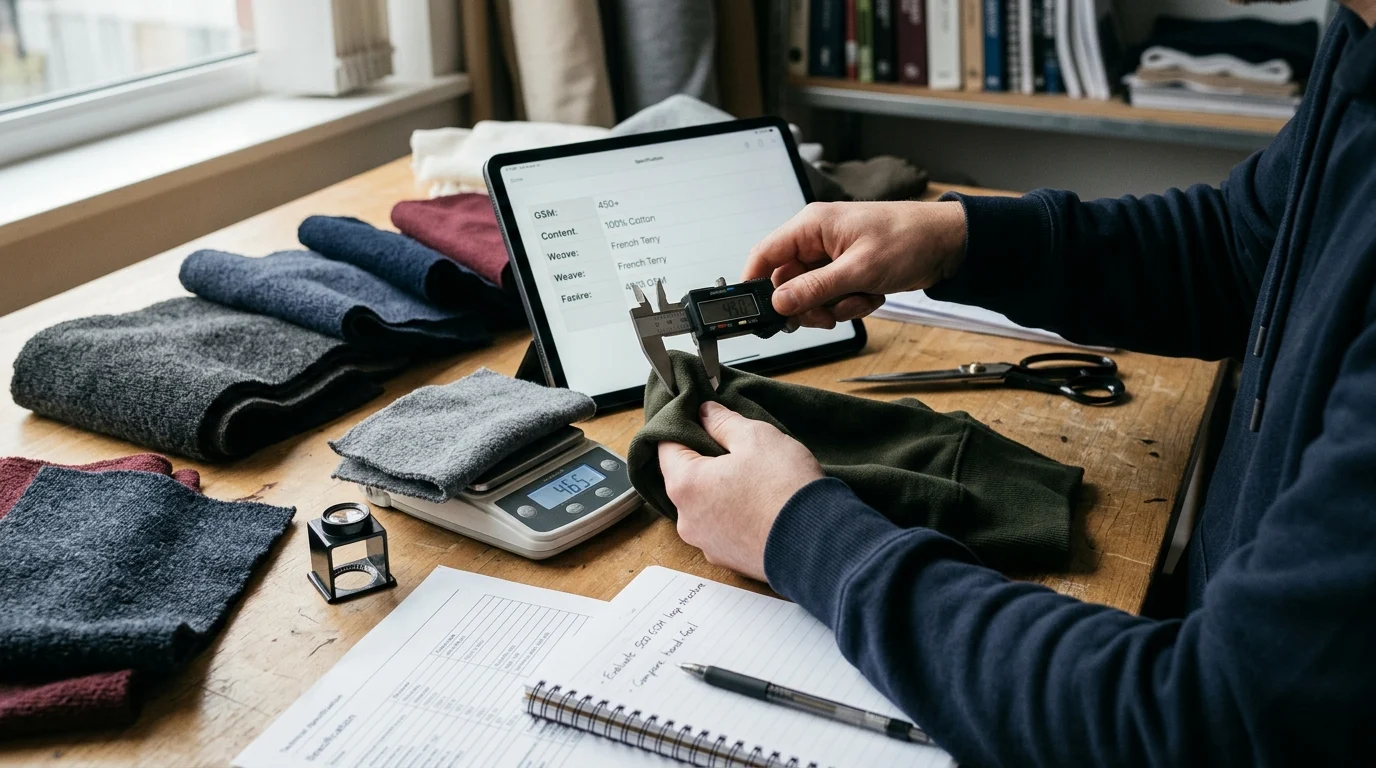
Evaluating density is just the first step in the sourcing journey. Just because a fabric is exceptionally heavy does not mean it is high quality. To build a genuinely luxury piece, you must look under the hood at the specific yarn properties, fiber blends, and knitting techniques that bring those heavy weights to life without feeling overly stiff.
Which fabric variables beyond GSM affect handfeel and drape
You can easily find a 450 GSM fabric that feels as rigid as cardboard if the underlying yarn quality is poor. To achieve a buttery, premium handfeel alongside a structured, architectural drape, you must evaluate yarn count and finishing techniques. Look for garments spun from 32s or 20s combed cotton yarn. The combing process removes shorter, breakable fibers, leaving behind a long-staple yarn that drastically reduces surface friction and enhances softness. Furthermore, the specific knit structure matters immensely. A heavyweight French Terry fabric offers distinctive, moisture-wicking loops on the inside, providing a breathable yet substantial drape. In contrast, a brushed fleece traps more body heat and feels softer against the skin, but it might pill faster if the blend ratio is not perfectly calibrated.
What comparison table should you use to assess cotton
options
When comparing various fabric options, rely on a standardized matrix to evaluate performance against target metrics. Here is a comparison table to assess potential materials for a premium cotton blend or pure cotton hoodie:
| Fabric Type | Ideal GSM Range | Shrinkage Tolerance | Pilling Resistance (1-5) | Best Application |
|---|---|---|---|---|
| 100% Cotton French Terry | 350 – 450 | < 3% | 4.5 | High-end streetwear, transitional weather |
| Cotton-Poly Brushed Fleece (80/20) | 380 – 500 | < 2% | 3.5 | Deep winter wear, maximum warmth |
| Interlock Double Knit | 320 – 400 | < 1.5% | 5.0 | Tailored, athletic-leaning gentlemen styles |
Using a breakdown like this ensures you are not blindly buying fabric weight. Instead, it actively secures the right performance characteristics for the specific climate, aesthetic, and functional demands expected from a top-tier garment.
How to Make the Final Sourcing Decision
Making the final call on a production run requires a rigorous, almost obsessive vetting process. Never commit to a bulk manufacturing order without putting physical samples through a highly methodical testing phase in the real world.
What step-by-step process should you follow to compare samples
A step-by-step process for comparing samples is strictly non-negotiable. First, request 1×1 meter fabric headers from at least three reputable mills. Once in hand, immediately run a standardized wash test. Put the swatches through five heavy-duty wash-and-dry cycles to check for colorfastness, dye bleeding, and dimensional stability. Next, measure the shrinkage with a fabric ruler; if a sample shrinks more than 3% in length or width, disqualify it from production. Finally, test the seam strength and stretch recovery. Heavyweight fabric places significantly more stress on stitching, so ensure the factory uses reinforced cover-stitching on the shoulders and cuffs. Only after a sample survives this entire gauntlet should it be approved for a full prototype run.
Which criteria determine the right high-GSM Gentlemen Hoodie
Ultimately, the right criteria balance physical quality with realistic commercial viability.
Key Takeaways
- The most important conclusions and rationale for Gentlemen Hoodies
- Specs, compliance, and risk checks worth validating before you commit
- Practical next steps and caveats readers can apply immediately
Frequently Asked Questions
What GSM is best for premium gentlemen hoodies?
Aim for 350–450 GSM, with 400 GSM often the sweet spot for structure, warmth, and a premium handfeel without excessive stiffness.
Does higher GSM always mean better hoodie quality?
No. Check yarn quality, knit structure, and finishing too. Combed 20s or 32s cotton and well-finished fleece or French terry usually perform better.
Which fabric works best for a tailored gentlemen hoodie?
Interlock double knit at 320–400 GSM is ideal for a cleaner, more refined silhouette. It offers strong shape retention and excellent pilling resistance.
How can I reduce shrinkage and returns on heavyweight hoodies?
Choose pre-shrunk fabrics and target shrinkage under 3%. On nbjmnoihsaf.com, compare fabric specs and knitting options before confirming production.
Should I choose French terry or brushed fleece for gentlemen hoodies?
Use French terry for breathable, all-season structure. Choose brushed fleece for softer feel and more warmth in winter-focused premium hoodie collections.
Post time: May-08-2026