

Introduction
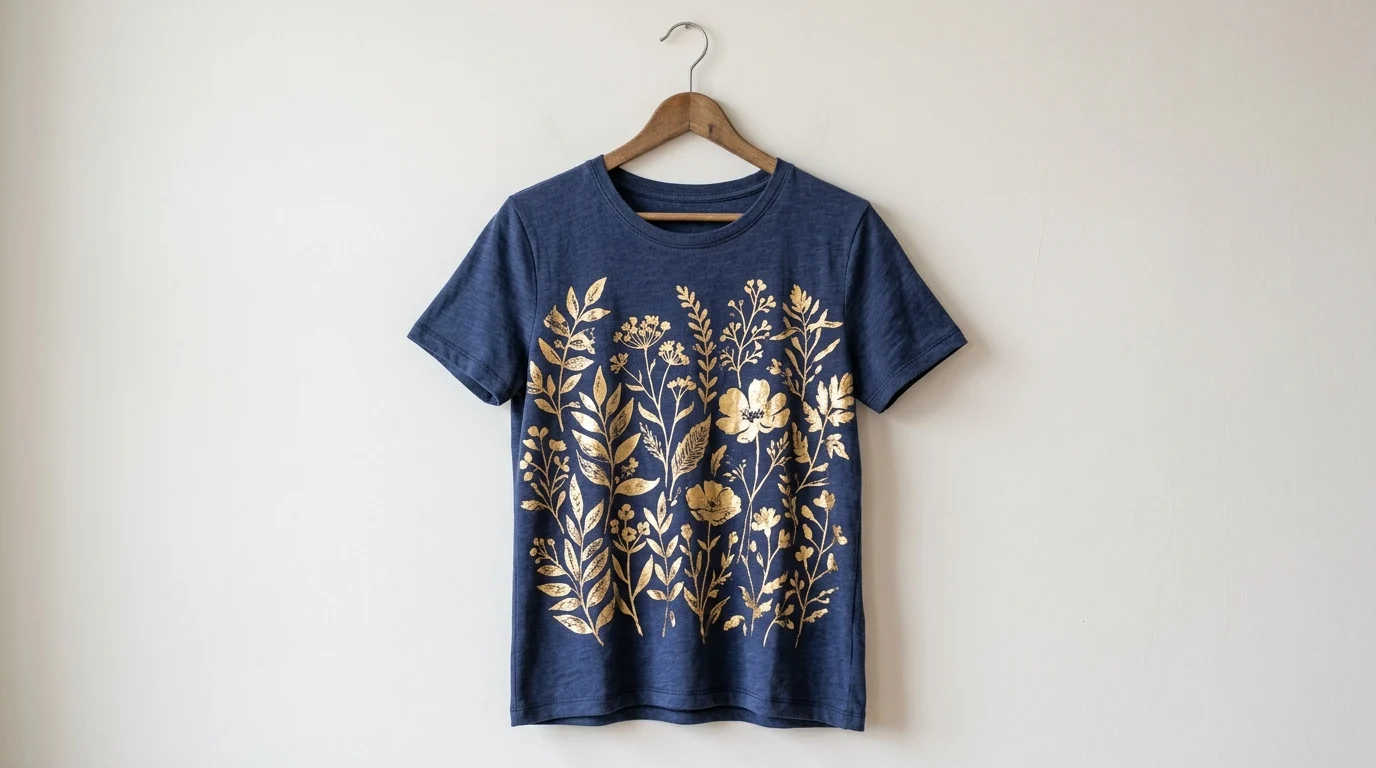
Metallic finishes are no longer limited to partywear or novelty basics. In 2026, the women’s foil print T-shirt has become a fast-fashion standout because it delivers shine, comfort, and easy styling in one lightweight piece. Improved print technology has made foil designs softer, more wearable, and better suited to everyday outfits, while social media and retail data show rising demand for clothes that move seamlessly from daytime to evening. This article explains why the trend is accelerating, what consumer behavior is driving it, and how brands are turning foil print tees into a core part of women’s seasonal collections.
Why Women’s Foil Print T-Shirts Are Gaining Popularity
I have been tracking fast fashion cycles closely, and if there is one breakout star for 2026, it is the revival of metallic finishes. We are stepping away from the heavy, stiff garments of the past and embracing lightweight, dynamic pieces. Historically, metallic prints felt cheap and rigid, but printing technology has advanced leaps and bounds. The modern women’s foil print T-shirt has evolved from a niche novelty item into a core wardrobe staple, blending comfort with high-impact visual appeal.
Market signals and consumer demand
Recent Q1 retail data makes this shift undeniable. Search volumes for shimmering women’s summer wear spiked by 42% year-over-year, heavily driven by consumers looking for day-to-night versatility. Shoppers want garments they can wear to a casual brunch that easily transition into evening wear with a quick change of accessories.
Gen Z and young millennial buyers are driving this trend, showcasing reflective garments in flash-photography environments on social media. The foil print tee hits this sweet spot perfectly, capturing the light and drawing attention without the bulk or scratchiness of traditional sequins.
How brands position the trend
Smart brands are capitalizing on this demand by shifting their design language. Instead of massive, full-chest logos, there is a pivot toward subtle, strategic foil accents—such as delicate metallic typography or abstract geometric hits. This positioning allows for a significant bump in retail markups.
While a standard basic tee might retail for $15 to $20, adding a high-quality foil application lets brands position these as trending ladies fashion tops priced between $28 and $35. That translates to padding gross margins by up to 18%, a massive win in the notoriously tight fast-fashion space. Furthermore, because foil elevates a basic silhouette, brands do not need to overcomplicate garment construction with expensive cut-and-sew details. The print does all the heavy lifting for perceived value.
What Makes a Strong Women’s Foil Print T-Shirt Program
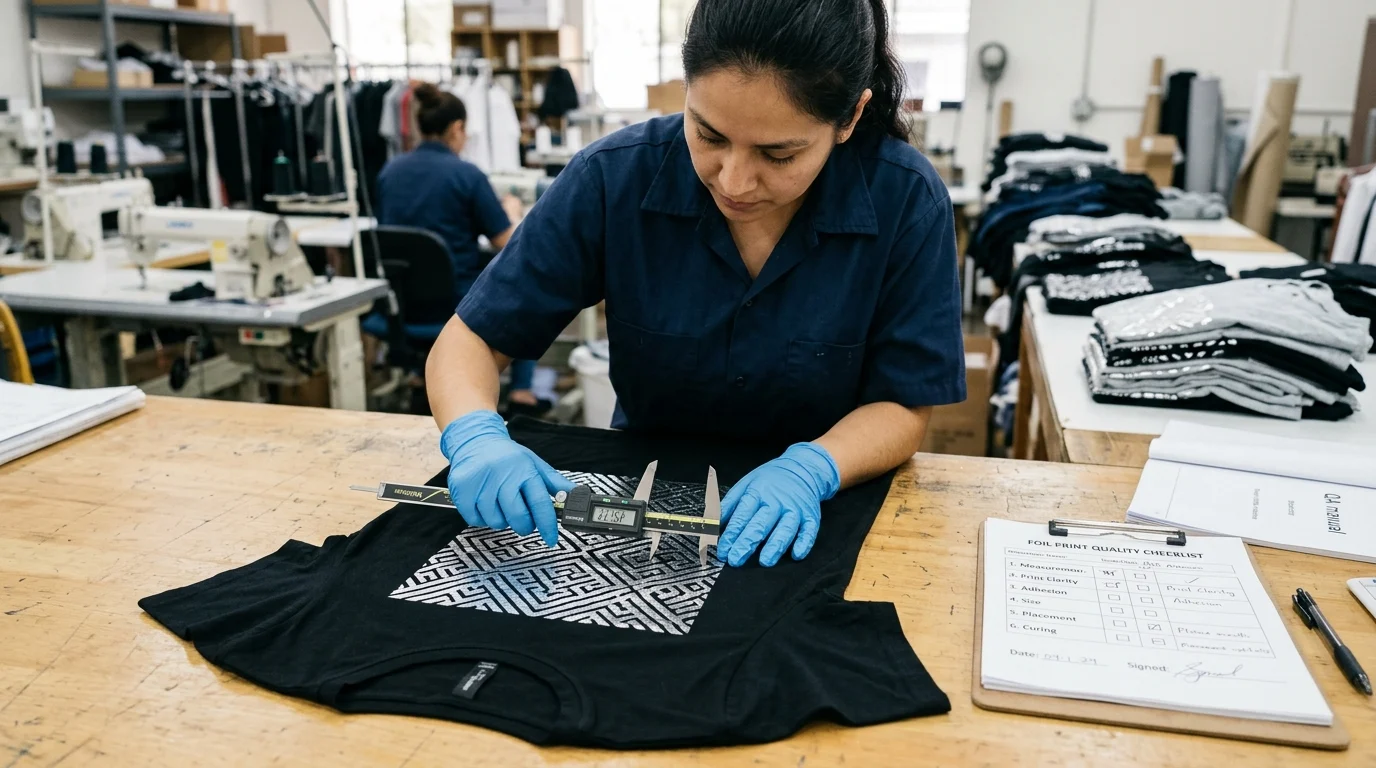
Not all foil is created equal. Consumers frequently experience the disappointment of a poorly made graphic tee that cracks, peels, or fades after a single cycle in the washing machine. Building a genuinely profitable foil print program requires dialing in technical specifications right from the start, long before a purchase order is issued.
Key evaluation criteria
Three main criteria are essential for evaluation: fabric weight, adhesive quality, and curing parameters. To support the foil adhesive properly without causing puckering, a minimum 160 to 180 GSM cotton-poly blend is ideal. Pure, thin cotton tends to warp under the heat press.
During production, foil transfers must be pressed at exactly 150°C to 160°C for 10 to 15 seconds. If the press is too hot, the foil tarnishes; if it is too cool, the foil flakes off immediately. Here is a quick breakdown comparing foil types when sourcing a new metallic print women’s tee:
| Foil Type | Avg. Cost Adder / Unit | Wash Cycles (Pre-degradation) | Standard Factory MOQ |
|---|---|---|---|
| Standard Metallic | $0.45 – $0.60 | 15 – 20 | 500 pcs |
| Holographic | $0.75 – $0.90 | 10 – 15 | 1,000 pcs |
| Liquid/Wet Look | $0.85 – $1.10 | 25+ | 1,500 pcs |
Trade-offs in feel, durability, and wash performance
The biggest challenge in production is managing the trade-off between hand feel and durability. A thicker layer of adhesive provides incredible wash fastness—often surviving 25 or more standard machine washes—but it leaves the shirt feeling like it has a plastic shield on the chest.
Conversely, a thinner adhesive feels beautifully soft but might start showing micro-cracks after just 10 washes. A solid 15-wash baseline is a practical target, supported by strict “cold-water wash, line dry” care labels. This manages consumer expectations while preserving the garment’s aesthetic lifespan. Additionally, the color of the foil impacts perceived durability; silver and gold tend to hide micro-abrasions much better than high-contrast holographic or red foils.
How Brands Can Source, Test, and Scale Women’s Foil Print
Scaling this trend means locking down the supply chain well before the seasonal rush. Sourcing wholesale graphic tees for women with custom foil applications cannot be rushed; it requires a disciplined, phased approach to avoid costly mass-production errors, especially when dealing with overseas vendors.
Production steps for fabric and print selection
The first step is ordering strike-offs (sample prints) on the exact bulk production fabric. Skipping the in-house wash testing phase is a major risk. Samples should be run through 5, 10, and 20 wash cycles to observe how the print behaves in real-world conditions.
Fabric shrinkage is the silent killer in this process. If the cotton base shrinks by more than 3% to 5%, it will pull at the rigid foil layer, causing immediate and irreparable cracking. The fabric must be pre-shrunk and stabilized before the print is applied. Mandating a silicone-free finish on blank garments is highly recommended, as silicone softeners actively repel the foil adhesive, leading to a catastrophic 40% to 50% failure rate right off the production line.
Decision guidance for scaling successfully
Moving from a test run of 500 units to a full rollout of 50,000 units completely changes operational dynamics. Factory MOQs for specialty imported foils often start at 1,000 units per colorway, and lead times will stretch. While a standard print might take 30 days, imported Japanese or Korean foil sheets—which often offer a 15% better retention rate than cheaper domestic alternatives—can push lead times to 45 or 60 days.
Key Takeaways
- The most important conclusions and rationale for women’ s foil print T-shirt
- Specs, compliance, and risk checks worth validating before you commit
- Practical next steps and caveats readers can apply immediately
Frequently Asked Questions
Why are women’s foil print T-shirts trending in 2026?
They offer lightweight comfort with a high-shine look that works from daytime to evening, making them a strong fast-fashion staple.
What fabric works best for a women’s foil print T-shirt?
A 160–180 GSM cotton-poly blend is usually best because it supports foil adhesive well and reduces heat-press warping.
How can I reduce cracking or peeling in foil prints?
Use quality adhesive, cure at 150–160°C for 10–15 seconds, and test wash performance before bulk production.
Which foil type is most practical for fast-fashion programs?
Standard metallic foil is often the most practical because it balances cost, acceptable durability, and lower MOQ requirements.
How should foil print tees be cared for after purchase?
Recommend cold-water washing and line drying to help preserve shine, reduce micro-cracking, and extend the print’s lifespan.
Post time: May-26-2026