

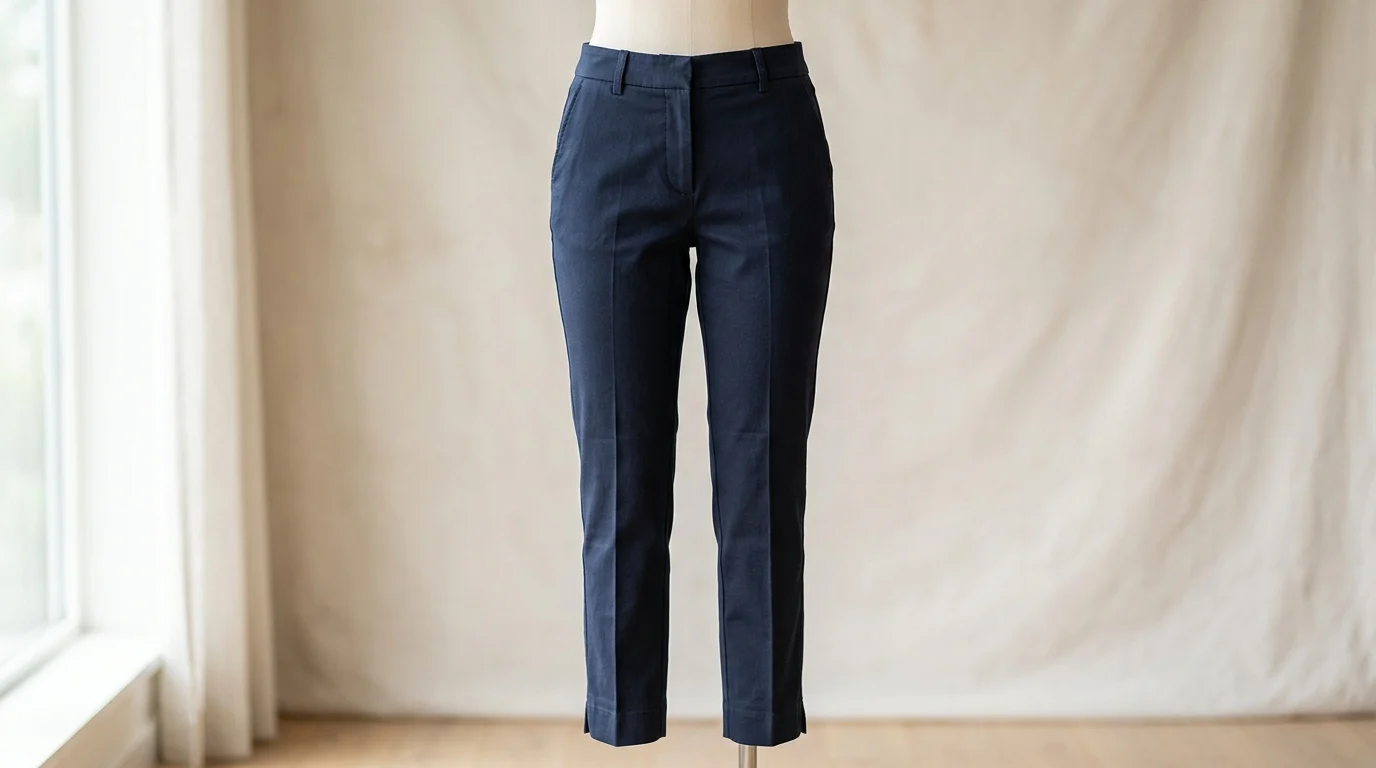
Why One-Stop ODM Services Are Reshaping the Global Ladies Pants
I’ve spent years watching apparel brands juggle multiple vendors, and managing a fragmented Supply Chain is often the fastest way to erode profit margins. When you source fabrics from one mill, zippers from another, and send everything to a third-party cut-and-sew facility, logistics become a nightmare. We frequently see brands lose 15% to 20% of their gross margin simply due to miscommunication, material waste, and shipping delays between these disparate nodes.
This is exactly why shifting to a consolidated manufacturing model makes sense for modern apparel businesses. By bringing every step of the process under one roof, brands can pivot faster, protect cash flow, and focus on marketing rather than putting out daily production fires.
Reducing development time and sourcing friction
Centralizing the manufacturing process drastically cuts down time to market. Instead of waiting 30 to 45 days just to coordinate a tech pack and raw materials across three different time zones, an integrated partner streamlines the entire operation.
With a dedicated team handling everything, you can take an initial concept to a physical prototype in just 7 to 14 days. This accelerated timeline eliminates the sourcing friction that normally bogs down seasonal collections, allowing you to react to fast-changing retail trends without missing delivery windows.
Why global buyers choose one-stop ODM partners
Global buyers are quickly adopting this consolidated approach. They choose a One-stop Service because it provides unparalleled accountability. When one facility handles everything from yarn sourcing and pattern drafting to final pressing and QA, it eliminates the classic vendor finger-pointing when a delivery runs late.
You gain a single point of contact responsible for delivering bulk orders on time. This streamlined communication reduces overhead costs for procurement teams and ensures that the brand’s original vision is executed flawlessly from the first stitch to the final polybag.
What to Evaluate in a Ladies Pants ODM Supplier
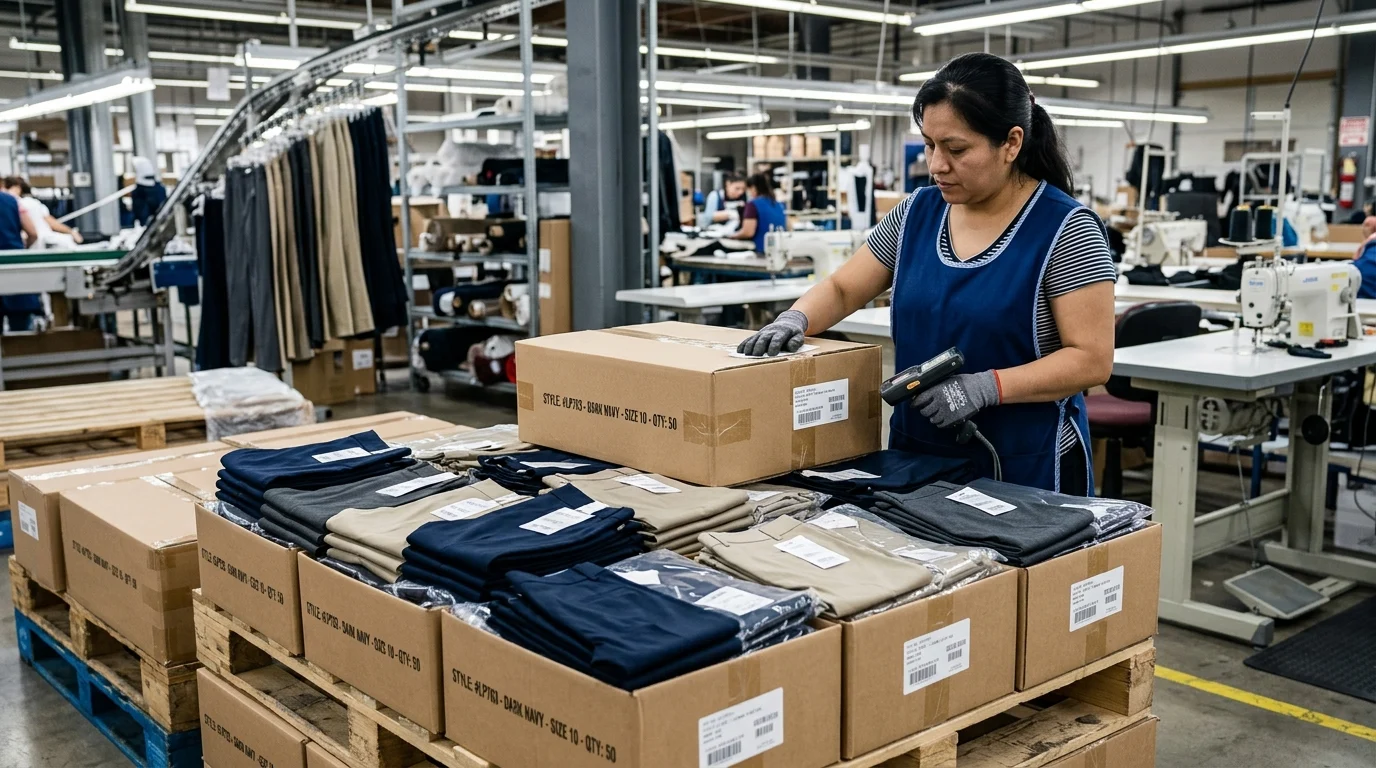
Evaluating a new factory for women’s trousers requires looking beyond the bottom-line price tag. You need a partner who intimately understands the nuances of the female form and can scale that understanding across thousands of units without losing fidelity.
Key specifications for fit consistency
Fit consistency is arguably the most critical metric in the LadiesPants category. A great design means nothing if sizing varies wildly from batch to batch. It is essential to audit a supplier’s grading rules and automated cutting tolerances before signing a contract.
For instance, a world-class facility will hold a strict +/- 0.5 cm tolerance on waistbands and inseams during bulk production. If you are working with high-stretch activewear or denim blends, you also need to verify their stretch recovery testing. Look for a minimum of 95% shape recovery after 30 minutes of wear simulation to avoid the dreaded “baggy knee” effect that leads to customer returns.
Comparing design and development capabilities
Beyond raw manufacturing execution, evaluate their creative and technical capabilities. A top-tier ODM provider features an independent, professional design and development team dedicated to offering a complete suite of services. By sharing your needs, sketches, ideas, and photos, they can bring your concepts to reality.
A strong partner doesn’t just wait for instructions; they proactively recommend suitable fabrics according to your preferences. Dedicated specialists should confirm every design and process detail with you, continuously updating their product library with trendy, functional, and eco-friendly materials, such as GRS-certified recycled polyester or organic cotton blends.
Benchmarking suppliers with a comparison table
To make the sourcing choice clearer, benchmark potential partners against your current manufacturing setup. Here is a quick comparison table to weigh a traditional factory against an integrated ODM partner:
| Capability Metric | Traditional OEM | One-Stop ODM |
|---|---|---|
| Design Support | None (Buyer provides Tech Pack) | Full (From sketch to reality) |
| Sample Lead Time | 21-30 Days | 7-14 Days |
| Fabric Sourcing | Buyer directed & managed | Proactive eco-friendly recommendations |
| Average MOQ | 1,000+ pcs/color | Flexible (Often 300-500 pcs/color) |
| Accountability | Fragmented across suppliers | Single point of contact |
How a One-Stop ODM Process Improves Product Development
How does this look in practice? When the entire development cycle is integrated under one roof, the workflow becomes incredibly transparent. It takes the guesswork out of launching a new collection and allows your merchandising team to plan retail drops with total confidence.
Step-by-step workflow from concept to production
The step-by-step workflow starts with your raw ideas. You hand over sketches, mood boards, or reference photos, and ODM specialists immediately get to work translating those concepts into manufacturable tech packs. Within 48 to 72 hours, they typically provide digital CAD drawings and physical fabric swatches for your review.
Once the technical details are approved, the process moves to the first sample phase, delivering a physical prototype in about 10 days. After you conduct a fit session on live models or mannequins, the team handles the necessary pattern adjustments. Final pre-production samples are usually wrapped up in just 2 to 3 revision cycles, getting you ready for bulk manufacturing weeks faster than traditional methods.
How to collaborate with an ODM team effectively
Effective collaboration is the secret to successful Brand Development. Procurement teams should assign a dedicated point person on their end to match the ODM’s specialist. This ensures nothing gets lost in translation.
Keep your feedback consolidated and use clear, annotated photos or video calls during fit sessions. The faster and more precisely you lock in process details—like pocket placements, zipper gauges, and seam finishes—the quicker your functional and trendy designs can move directly onto the production floor.
Trade, Compliance, and Logistics Factors to Review When Importing Ladies
Once the design is perfected and the samples are sealed, brands must navigate the realities of global trade. Getting goods from the factory floor to your domestic distribution center smoothly requires strict attention to compliance, quality assurance, and freight logistics.
Quality standards, testing, and labeling requirements
Quality standards can make or break an import shipment. A reliable ODM strictly adheres to an AQL 2.5 standard for major defects and 4.0 for minor defects during inline and final random inspections. This statistical baseline ensures your bulk delivery matches the approved pre-production sample.
Furthermore, products must pass rigorous third-party testing to legally enter most Western markets. Color fastness to washing and rubbing should hit a Grade 4 or higher, and dimensional stability (shrinkage) must be kept strictly under 3%. Don’t forget compliance labeling—ensure care labels meet FTC or EU regulations, explicitly stating fiber content percentages, care instructions, and country of origin.
MOQ, packaging, and carton planning
Logistics planning starts long before the goods are boxed up. Minimum Order Quantities (MOQs) typically hover around 300 to 500 pieces per color for custom ODM projects, allowing for healthy inventory testing without massive capital lockup.
When it comes to packaging, optimized carton planning saves significant freight costs. A standard double-corrugated export carton measuring 60x40x40 cm safely holds about 40 to 50 pairs of flat-packed trousers. By calculating the exact volumetric weight in advance, ODMs maximize container space, whether you are shipping LCL (Less than Container Load) or booking a full 40-foot HQ, ultimately driving down your landed cost per unit.
How to Choose the Right One-Stop ODM Partner
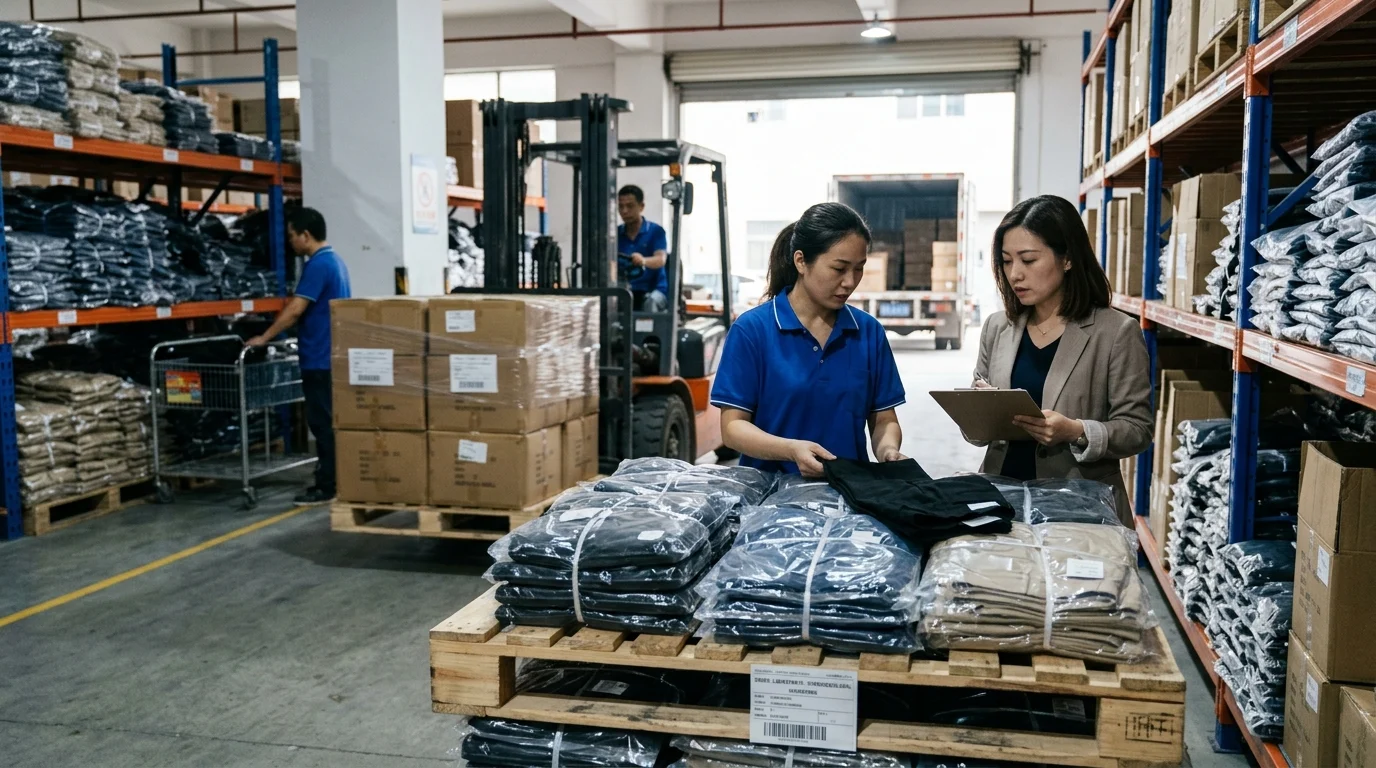
Finding the right manufacturing partner is much like finding a good long-term business partner—it requires deep due diligence, clear performance metrics, and a shared vision for sustainable growth. You cannot afford to make a choice based on a glossy catalog alone.
Practical supplier selection criteria
Practical selection criteria should always be rooted in hard, verifiable data. Look for factories that consistently maintain defect rates below 2% across multiple production runs. Furthermore, they must hold valid, up-to-date social compliance and ethical manufacturing audits, such as BSCI, Sedex, or WRAP.
Communication speed is another major filtering mechanism. If a supplier cannot maintain a 24-hour Service Level Agreement (SLA) on emails during the relatively calm sampling phase, they will likely be unresponsive when a crisis hits during peak production season. Always run a pilot order—perhaps a 100-piece test run—before committing to a 5,000-piece seasonal contract.
Final sourcing checklist for procurement teams
To help your procurement team make the final, objective call, here is a standard sourcing checklist. Use this matrix to score potential partners before signing any binding purchase orders or wiring a deposit.
| Evaluation Area | Key Questions to Ask | Minimum Target Score |
|---|---|---|
| Technical Capability | Can they handle complex stretch fabrics and custom grading? | 9/10 |
| Compliance & Ethics | Do they hold current BSCI/Sedex and ISO certifications? | Pass/Fail |
| Logistics & Packing | Are their carton dimensions optimized for standard palletizing? | 8/10 |
| Communication | Is there a dedicated English-speaking specialist assigned? | 10/10 |
| Quality Assurance | Do they enforce AQL 2.5 and provide independent inspection reports? | Pass/Fail |
Key Takeaways
- Wholesale sourcing and supply-chain implications for LadiesPants
- Specifications, compliance, and commercial terms buyers should validate
- Actionable recommendations for distributors and procurement teams
Frequently Asked Questions
What does one-stop ODM mean for ladies pants brands?
It means one partner handles design, fabric sourcing, sampling, production, and QA, reducing delays, miscommunication, and supplier coordination.
How fast can a ladies pants prototype be developed?
With an integrated ODM workflow, a prototype can often be completed in 7 to 14 days after confirming your sketch, specs, and fabric direction.
What fit standards should I check when choosing a ladies pants supplier?
Ask for grading rules, automated cutting tolerances, and stretch recovery data. A strong supplier targets about +/-0.5 cm tolerance on waistbands and inseams.
Can nbjmnoihsaf.com support fabric recommendations for women’s trousers?
Yes. The site highlights proactive fabric guidance, including trendy and eco-friendly options like recycled polyester and organic cotton blends.
What MOQ is typical with a one-stop ODM partner for ladies pants?
Many integrated ODM suppliers offer flexible MOQs around 300 to 500 pieces per color, depending on fabric, trims, and construction complexity.
Post time: Apr-16-2026