

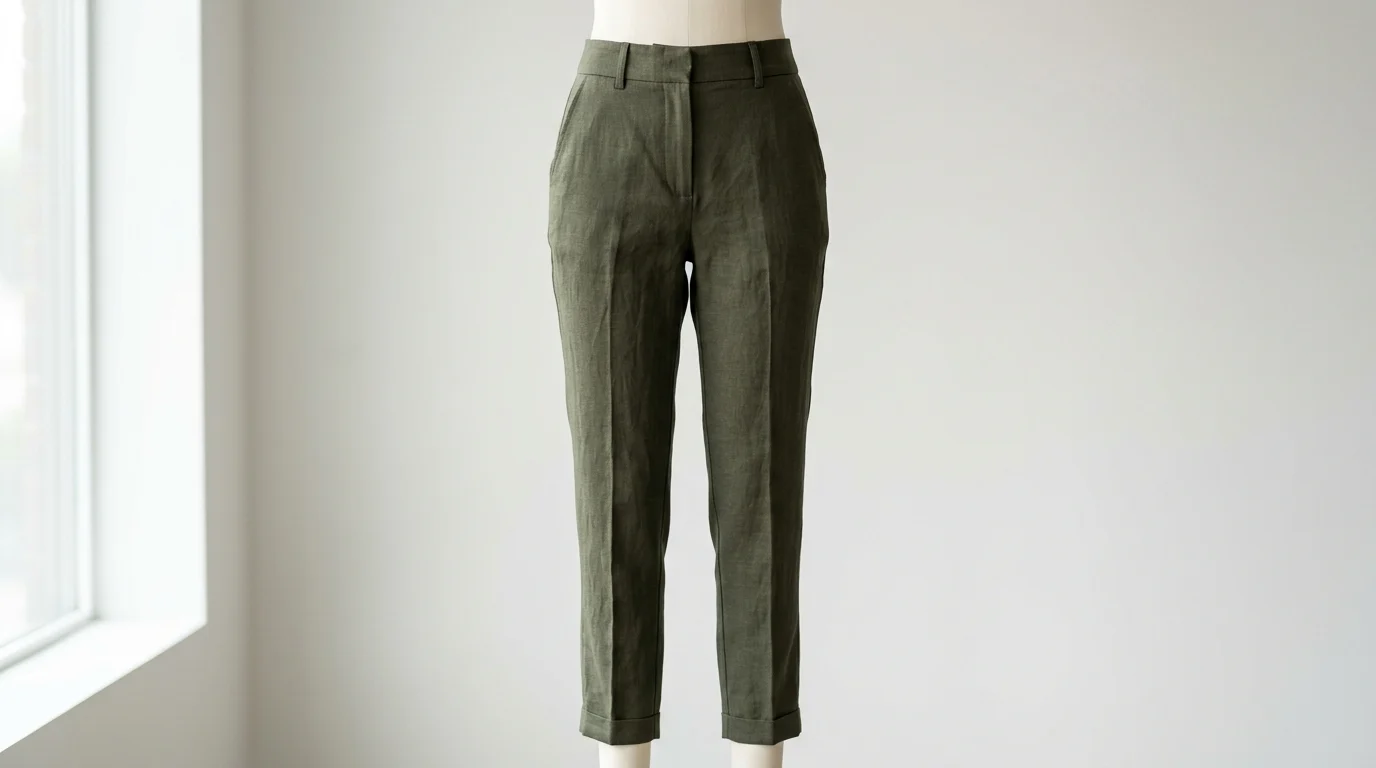
Hybrid Workwear Trends Driving Women’s Office Pants Demand
For those monitoring the apparel market, the traditional 9-to-5 uniform is practically unrecognizable today. Years of analyzing B2B apparel supply chains reveal that the shift toward hybrid work schedules has completely rewritten the playbook for women’s trousers.
This is not just a minor styling tweak; it is a fundamental overhaul in how procurement teams source office apparel. Today’s buyers demand products that perform just as well on a living room sofa as they do in a corporate boardroom.
How hybrid schedules affect fit, fabric, and styling
When employees split their time between remote work and the office, their expectations for Workwear change drastically. There is a massive pivot away from rigid, 100% wool or stiff polyester blends. Instead, the market demands 4-way stretch fabrics incorporating 12% to 18% spandex or elastane. Styling has adapted as well, featuring pull-on waistbands cleverly disguised as traditional flat-front closures, hidden drawstrings, and wrinkle-resistant finishes that can survive a two-hour commute without looking crumpled.
Which B2B buyer segments are driving demand
Demand for these hybrid trousers is heavily driven by corporate uniform distributors and mid-tier private label retailers. Distributors supplying the hospitality and corporate sectors are aggressively upgrading their catalogs, often ordering initial quantities of 5,000 to 10,000 units per style to replace outdated, rigid inventory. Meanwhile, e-commerce boutique brands are targeting the ‘workleisure’ niche, pushing factories for faster turnaround times on smaller, trend-driven batches to capture the shifting consumer mindset.
Product Specs for Versatile Women’s Office Pants
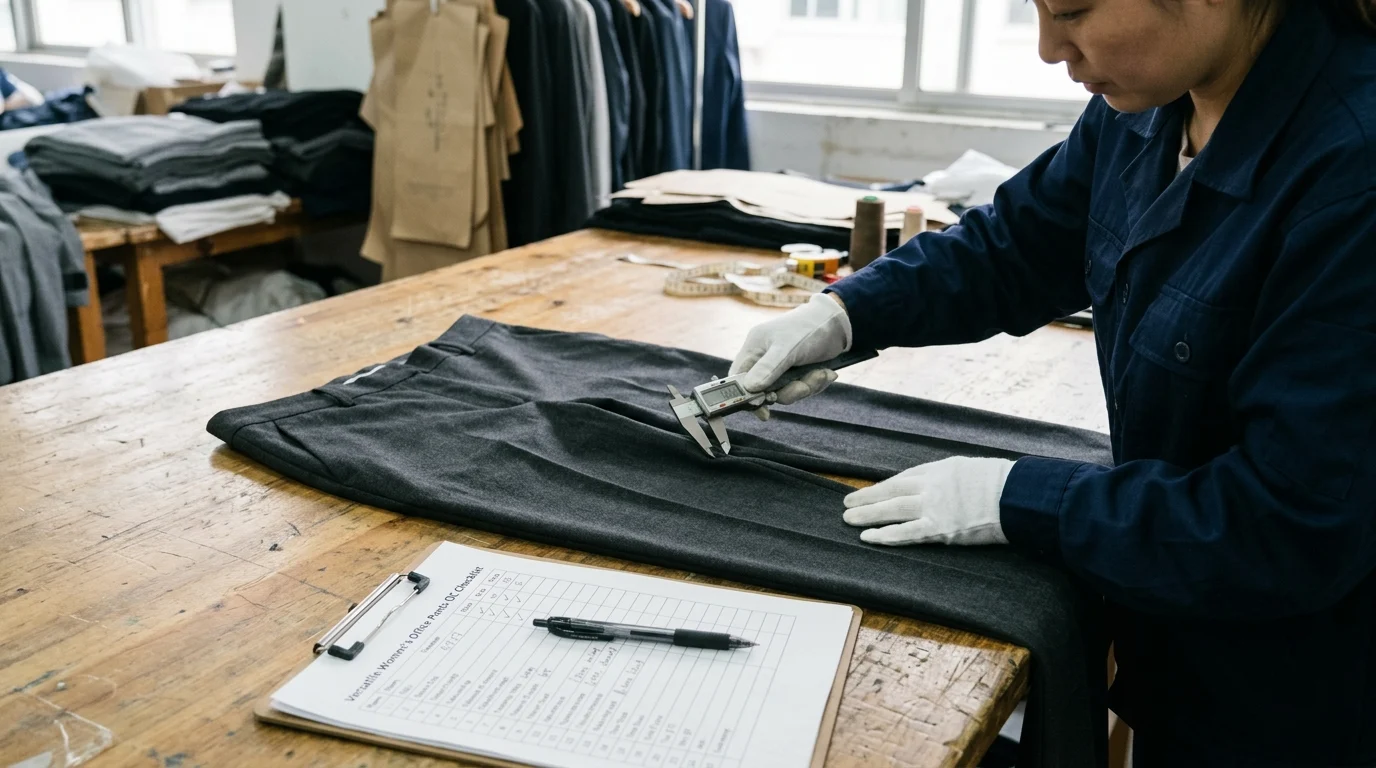
Evaluating a tech pack for modern office trousers requires a very specific balance of specifications. Simply adding an elastic waistband to a basic pair of slacks is no longer enough to attract B2B buyers.
Which fabrics and construction details balance comfort and durability
The key lies in the material and the seams. Recommended fabrics include heavy-weight Ponte Roma (typically 280-320 GSM) or engineered stretch twill. These materials offer the drape of traditional tailoring combined with the comfort of activewear. Construction details like reinforced crotch seams and deep, functional pockets (at least 6 inches deep to securely hold a smartphone) are non-negotiable for today’s end-users.
| Fabric Type | Typical GSM | Elastane Content | Best Application |
|---|---|---|---|
| Ponte Roma Knit | 280-320 | 5-8% | Pull-on styles, slim fit |
| Stretch Woven Twill | 220-250 | 3-5% | Chinos, straight leg |
| Bi-stretch Crepe | 180-210 | 4-6% | Wide-leg, fluid drape |
How to compare fit blocks, size ranges, and color options
Developing reliable fit blocks is where many brands stumble. For high-volume LadiesPants, a graded size range that accommodates diverse body types is essential—typically spanning standard US sizes 2 through 18, with inseams offered in petite (28″), regular (30″), and tall (32″). Regarding color, while seasonal tones like olive or burgundy generate interest, it is advisable to keep 70% of production inventory locked into core, high-turnover colors: black, navy, and charcoal.
What evaluation criteria procurement teams should use
When procurement teams evaluate a physical sample, they need hard data rather than a subjective ‘good feel.’ Buyers should look for a dimensional stability (shrinkage) rate of less than 3% after five standard wash cycles. Additionally, pilling resistance should score a minimum of Grade 4 on the Martindale test. If the fabric starts fuzzing after a week of friction, return rates and corporate client complaints will skyrocket.
Sourcing and Custom Development with Reliable Suppliers
Finding a supplier who truly understands the nuances of hybrid workwear is half the battle. A great manufacturing partner does more than just cut and sew; they actively refine and improve the product before it ever hits the production floor.
What sampling-to-bulk workflow is most efficient
An efficient sampling-to-bulk workflow can shave weeks off a go-to-market calendar. Starting with 3D digital renders to finalize the silhouette eliminates at least one round of physical prototyping. Once the digital model is approved, the process moves to a first fit sample, followed by a pre-production sample (PPS) in the actual bulk fabric. A tight, well-managed workflow should take no more than 21 to 30 days from the initial tech pack submission to final PPS sign-off.
How development teams can support product recommendations
This is where a strong ODM Design team becomes invaluable. An independent, professional design and development team is dedicated to providing clients with a complete set of services. By sharing needs, sketches, ideas, and photos, brands can see their concepts brought to reality. Dedicated specialists confirm design and process details, recommending suitable fabrics based on specific drape and stretch preferences. Furthermore, continuously updated product libraries provide trendy, functional, and eco-friendly fabrics—like recycled polyester blends—alongside modern accessories to keep the product line competitive.
Which checkpoints matter most for MOQ, lead times, and quality
When looking at the numbers for custom styles using stock fabrics, negotiating a Minimum Order Quantity (MOQ) of 500 to 800 pieces per color is standard. If custom-dyeing a proprietary shade, expect that MOQ to jump to around 2,000 pieces. Lead times should be strictly outlined in the vendor agreement; 45 to 60 days is standard after PPS approval. Crucially, quality checkpoints must be baked into the timeline, specifically an inline inspection at 20% production completion to catch sewing flaws early.
Compliance, Packaging, and Logistics Risk Control
Even the most beautifully tailored trousers will lose their profit margin if they get held up at customs or arrive damaged. Compliance, packaging, and logistics must be taken just as seriously as the initial design phase.
Which compliance and testing standards buyers should review
Before authorizing the shipment of a single unit, ensure the supplier meets international chemical and safety standards. For the European and US markets, REACH and CPSIA compliance are mandatory to ensure there are no restricted substances like azo dyes or excess lead in the zippers. Requiring OEKO-TEX Standard 100 certification on all fabrics and trims is also highly recommended. It gives B2B buyers verifiable peace of mind that the garments are safe for prolonged skin contact.
How packaging, carton planning, and delivery terms affect margins
Packaging drastically impacts landed costs. For wrinkle-resistant Office Fashion, flat packing is often preferable to shipping garments on hangers (GOH). Flat packing in standard 60x40x30 cm master cartons maximizes shipping container space. Fitting 40 pieces per carton instead of 25 significantly reduces the freight cost per unit. Always specify delivery terms clearly—FOB is generally the standard for maintaining control over ocean freight negotiations.
| Packaging Method | Units per Carton (Est.) | Freight Cost Impact | Ideal Application |
|---|---|---|---|
| Flat Pack (Polybag) | 40-50 | Low | Knits, wrinkle-resistant wovens |
| Garment on Hanger (GOH) | 15-20 | High | High-end structured tailoring |
| Vacuum Pack | 60-80 | Very Low | Rarely used for premium office wear |
What pre-shipment and inspection steps reduce claims
Never skip the final quality inspection. Mandating a third-party pre-shipment inspection using the AQL 2.5 standard for major defects and 4.0 for minor defects is essential. This involves pulling a randomized sample from the fully packed cartons to check for broken stitches, incorrect labeling, or fabric shading issues. Catching a 5% defect rate at the factory prevents catastrophic chargebacks from retail partners down the line.
Building a Profitable Women’s Office Pants Assortment
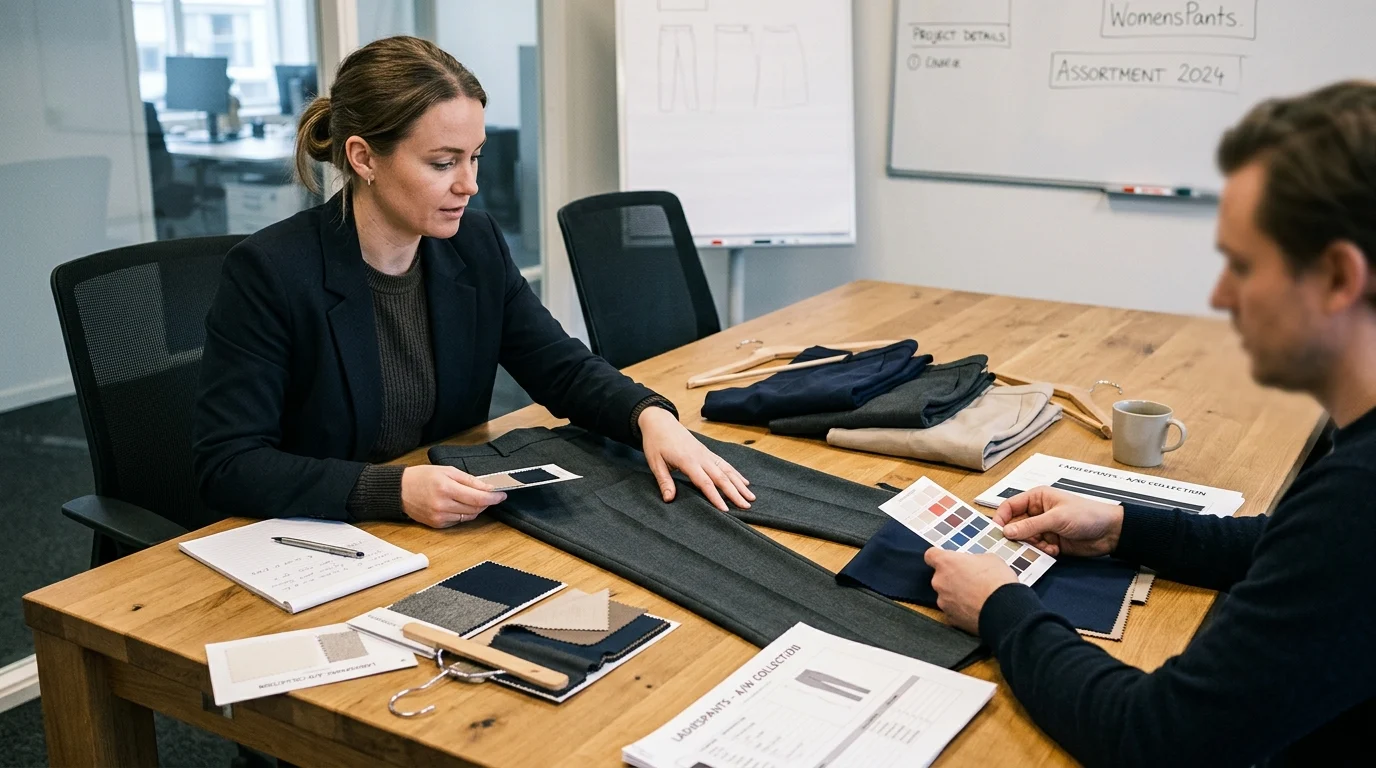
Bringing it all together requires a highly strategic approach to the product mix. Building out trouser categories relies on balancing reliable staples with just enough trend-driven excitement to keep buyers engaged and ordering.
Which assortment strategies fit distributors, private labels, and retailers
The assortment strategy should directly reflect the distribution channel. For B2B uniform distributors, the mix should be roughly 90% core, never-out-of-stock items in standard fits and neutral colors. Private labels and retailers, however, can afford a 70/30 split. Keep 70% of the open-to-buy budget allocated to staple black and navy stretch-wovens, and use the remaining 30% to test seasonal variations—like a wide-leg silhouette in a trending camel or rust tone. This minimizes inventory risk while driving incremental seasonal sales.
How procurement teams should make the final supplier decision
When awarding the final manufacturing contract, procurement teams must look far beyond the raw FOB price. Utilizing a supplier scorecard that heavily weighs communication, sample turnaround time, and quality consistency alongside unit cost is highly effective. A factory that charges $12 per piece but delivers on time with a 1% defect rate is vastly superior to a factory charging $10.50 but plagued by 30-day delays and 8% defect rates. By partnering with suppliers who truly understand the technical nuances of Professional Attire, brands secure a supply chain that protects margins and builds a lasting reputation.
Key Takeaways
- Wholesale sourcing and supply-chain implications for LadiesPants
- Specifications, compliance, and commercial terms buyers should validate
- Actionable recommendations for distributors and procurement teams
Frequently Asked Questions
What fabric works best for hybrid-work LadiesPants?
Use Ponte Roma 280–320 GSM or stretch twill 220–250 GSM with elastane. These fabrics balance office polish, stretch comfort, and wrinkle resistance for all-day wear.
Which features should buyers prioritize in modern office pants?
Focus on 4-way stretch, hidden comfort waistbands, reinforced crotch seams, and pockets at least 6 inches deep. These details improve comfort, durability, and daily practicality.
What size and inseam range should a LadiesPants line include?
A practical range is US sizes 2–18 with petite 28″, regular 30″, and tall 32″ inseams. This covers more body types and reduces fit-related returns.
How can Dyon Fashion support private label LadiesPants development?
Dyon Fashion can help with custom sampling, fit refinement, and bulk production planning. Start with a clear tech pack to speed approvals and reduce revisions.
What quality checks matter most before bulk production?
Check shrinkage under 3% after five washes and pilling resistance at Grade 4 or above. These benchmarks help protect product appearance and long-term performance.
Post time: Apr-16-2026